Residential Schools
It is estimated that over 150,000 First Nations, Inuit, and Métis children were forcibly sent to 139 Residential Schools, day schools, and industrial schools across Canada.
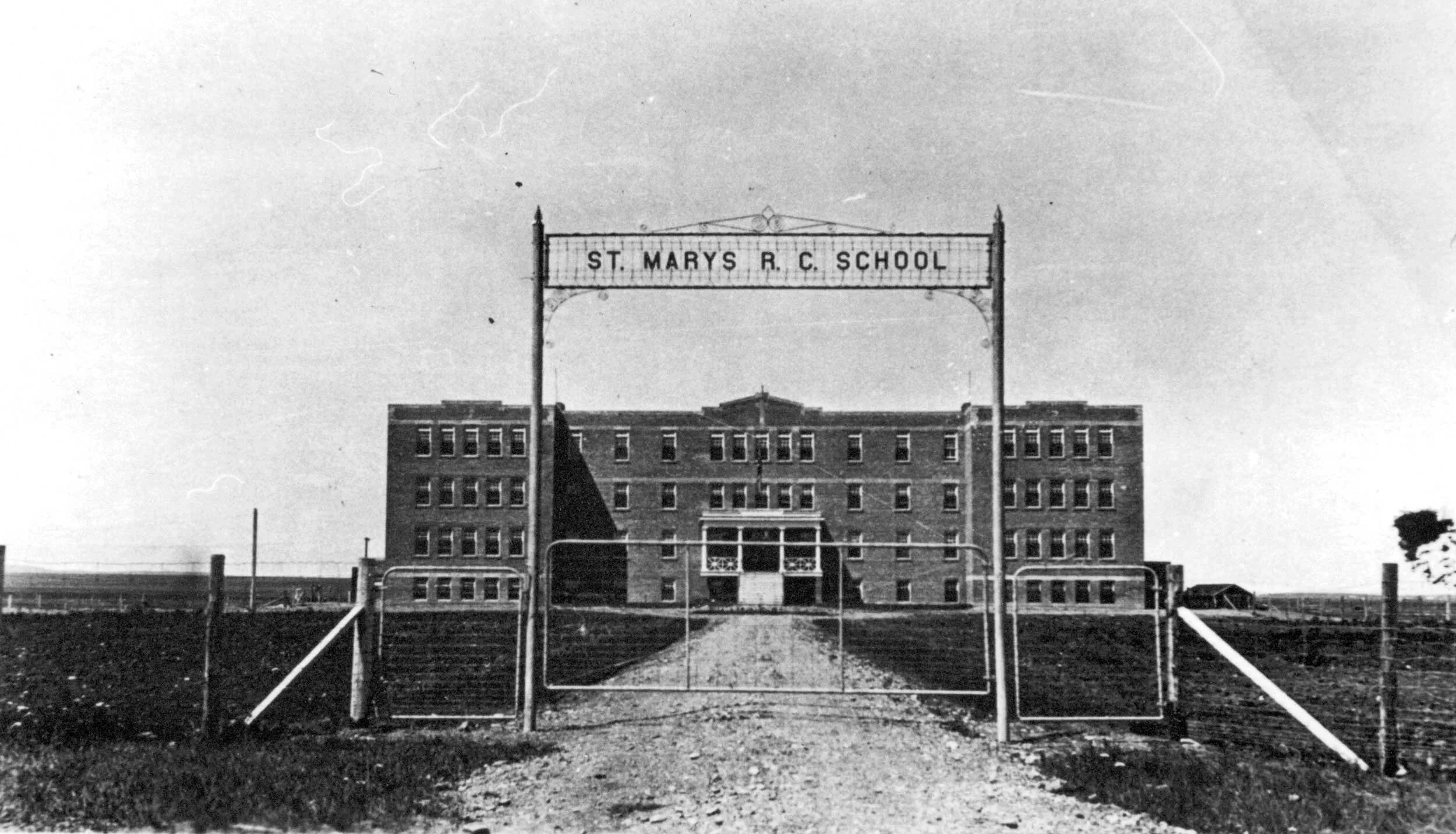
St. Mary’s Indian Residential School on the Blood Reserve, south of Lethbridge. (Galt Museum & Archives)Alberta had 25 Residential School locations, more Residential Schools than any other province in Canada. Each school in Alberta was different depending on the location and the religious affiliation (Roman Catholic, United Church, or Anglican).
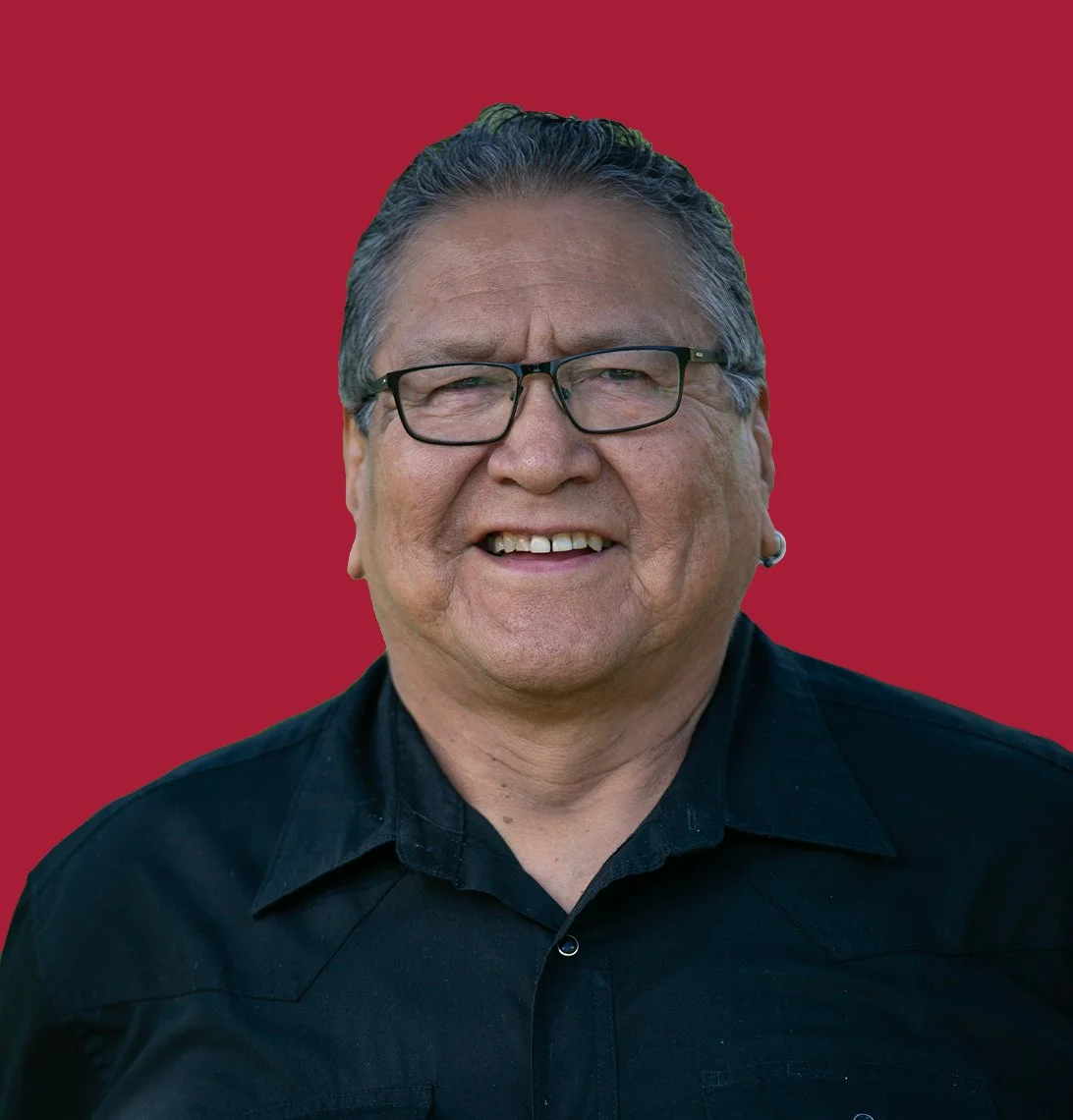

Some of the stories that in our culture are passed down from the Elders and to make us appreciate life more, life is a gift to Creator. Visit your relatives while they’re still here, that’s who we are as a people. Love each other and go visit each other.”
- John Chief Moon Jr.
Elders Knowledge Circle: Video seriesJohn Chief Moon Jr.
The Importance of intergenerational healing
Truth and reconciliation —
The truth comes first
we have to try to get the truth first before any reconciling can be done.”
- Francis Melting Tallow
Ten of the twenty five
Ten of the 25 Indian Residential Schools in Alberta were on Treaty 7 territory. These were St. Mary’s and St. Paul’s on Kainai Nation, St. Cyprian’s and Sacred Heart on Piikani Nation, Old Sun and Crowfoot (St. Joseph’s) on Siksika Nation, St. Barnabas on Tsuut’ina Nation, Morley on Stoney Nakoda Nation, and St. Joseph’s (Dunbow) in High River. The last Residential School to operate in Treaty 7 territory was St. Mary’s Residential School, which operated from 1926 until 1988 (it replaced the earlier Immaculate Conception Boarding School established in 1898).
For some families, several generations attended Residential School, and the trauma experienced from attending these institutions has had a devastating impact on families and communities.
Thousands of children also died while attending Residential Schools, but the exact number remains unknown due to incomplete records. According to Volume 4 of the Truth and Reconciliation Commission of Canada’s final report, Alberta’s Residential Schools recorded 821 school-related deaths, the highest number in the country. These numbers continue to grow as unmarked graves are identified at Residential Schools across Canada.
Grownding exercises
Learning about the history and colonization of Indigenous Peoples and Residential Schools can be difficult. Please watch, read, participate and learn with care. You may find engaging in some of these mindfulness activities helpful along the way
Look around and name:
1 thing you can
Taste
1 thing you can
Smell
1 thing you can
Hear
1 thing you can
Feel
1 thing you can
See